The Vehicle Closed 399 Days Ago
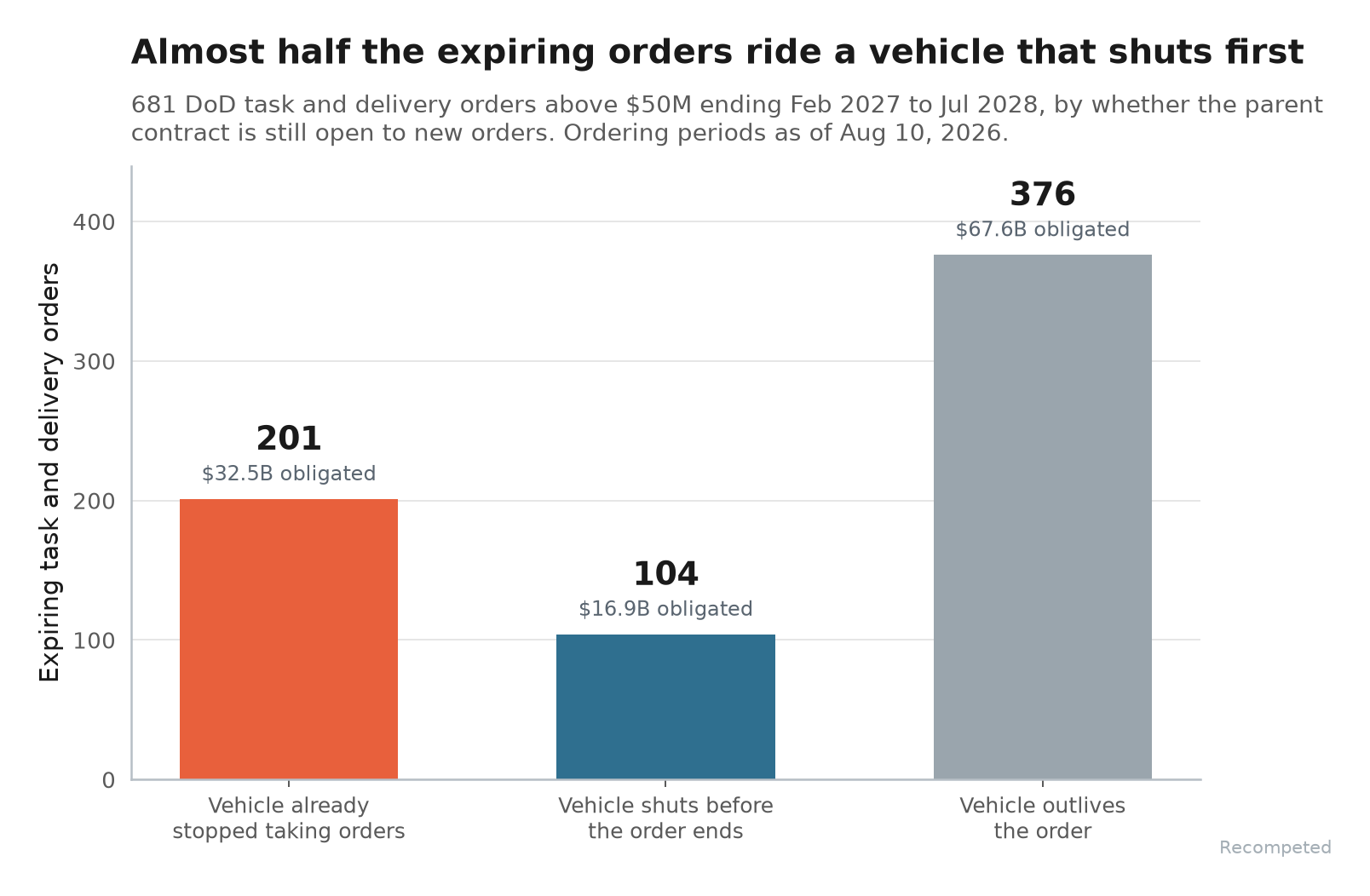
We refreshed the expiration pipeline this morning and pulled the parent vehicle behind every expiring task order. Of the 681 orders, 305 ride a contract whose ordering window shuts before the order does, and 201 of those vehicles are already closed. That changes where the follow-on can physically land.
201 task orders in the desk's expiration pipeline are riding a parent vehicle that stopped accepting new orders. The median one shut 399 days ago.
We refreshed the pipeline this morning: 1,176 DoD prime contracts above $50M coming off period of performance between February 2027 and July 2028, $424.50B obligated. Then we pulled the parent record behind every row.
681 of those rows, 57.9%, are task or delivery orders under a vehicle, spread across 457 distinct parents. 335 of those parents carry exactly one expiring order.
Then the dates stopped agreeing with each other. On 305 of the 681, the vehicle's ordering window closes before the order's own end date, and on 201 it closed already (chart below).
That is $49.3B of work whose incumbent has no door left to walk back through.
Why a Dead Vehicle Keeps Paying
FAR 52.216-22(d) is the whole mechanism, and it has read the same way since 1995:
"Any order issued during the effective period of this contract and not completed within that period shall be completed by the Contractor within the time specified in the order."
So the order is fine. Performance runs to its own end date, mods keep landing, invoices keep clearing, and nothing on the order's record says the vehicle underneath it went dark.
Which is exactly why this is invisible in a normal pipeline review. You pull the order, you read its end date, you diary the recompete.
The order tells you nothing about whether the incumbent still holds a seat that can catch the follow-on.

The rest of this brief is for subscribers.
The specific solicitations, dockets, and dates to act on sit past this line.
$50 a month, or $500 a year.
Already a subscriber? Sign in